The northeastern region of Seoul is actually an unfamiliar neighborhood even to me, a Seoul native. Unlike the bustling downtown areas of Seoul, it consists of densely populated residential areas that you rarely have a reason to visit unless you happen to live there or have a specific connection to the place. In mid-May, hearing the news that the Rose Festival was being held in Jungnang-gu(중랑구)—and with the dates lining up perfectly—I decided to set it as my main destination for the day and check it out.
Before heading out, I opened my ‘Naver Map’ app to look over my saved spots. There, pinned right in the middle of a seemingly empty neighborhood, was a single star: the ‘Kim Chung-up House of Architectural Culture.’ I figured if I didn’t go now, it wouldn’t be easy to visit later, so I decided to head there first.
I took the subway, transferred to a bus at Sungshin Women’s University Station(성신여대입구역), and headed toward Jangwi-dong(장위동). (+As a side note, whether you are a local or a foreigner, checking real-time bus updates on the ‘Naver Map’ app is an absolute must in Seoul.) After getting off at the bus stop, I walked up a slight hill following the navigation. Situated quite unexpectedly among the countless ordinary houses of Jangwi-dong was the first destination of the day.
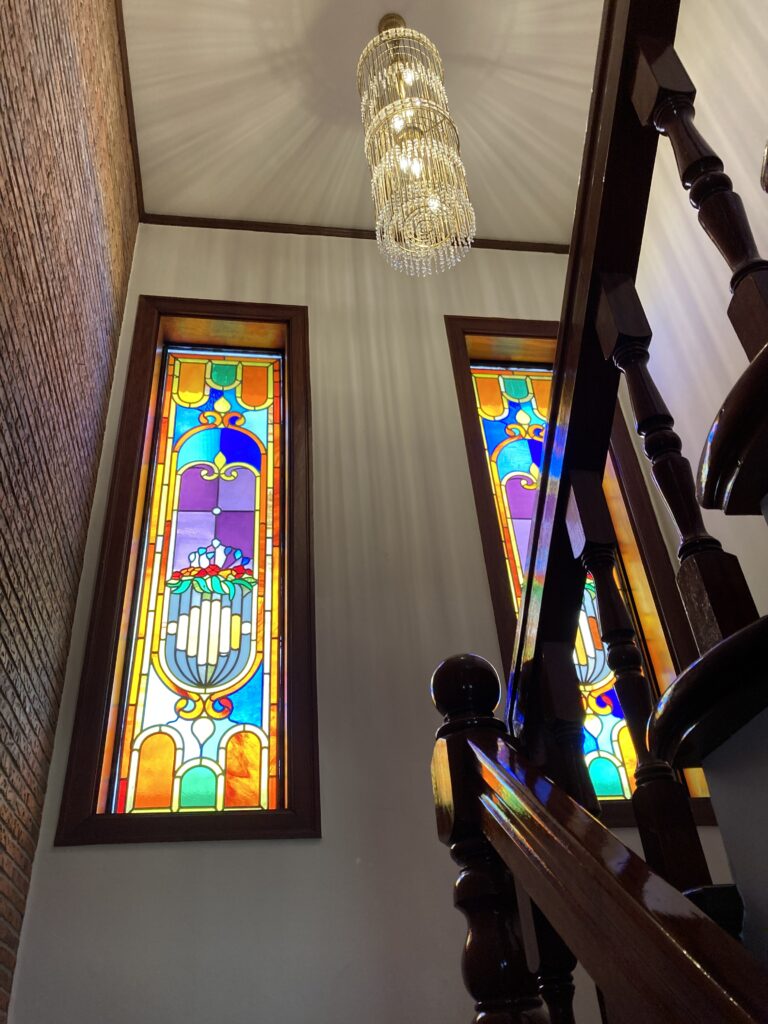
Kim Chung-up House of Architectural Culture
- Address: 11 Jangwi-ro 21na-gil, Seongbuk-gu, Seoul
- Hours: 10:00 – 17:00 / Closed on Sundays and Mondays
- Admission: Free
- Official Website: https://sma.sbculture.or.kr/kcu/index.do
- Map: Google Maps | Naver Map (Recommended for navigation in Korea)
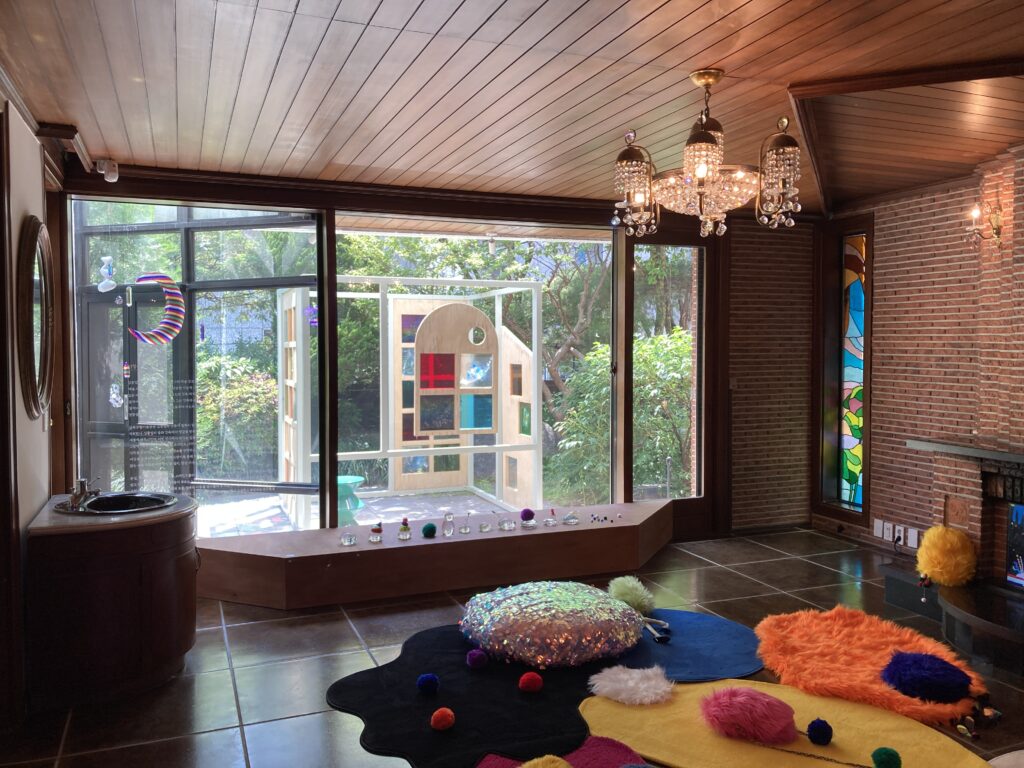
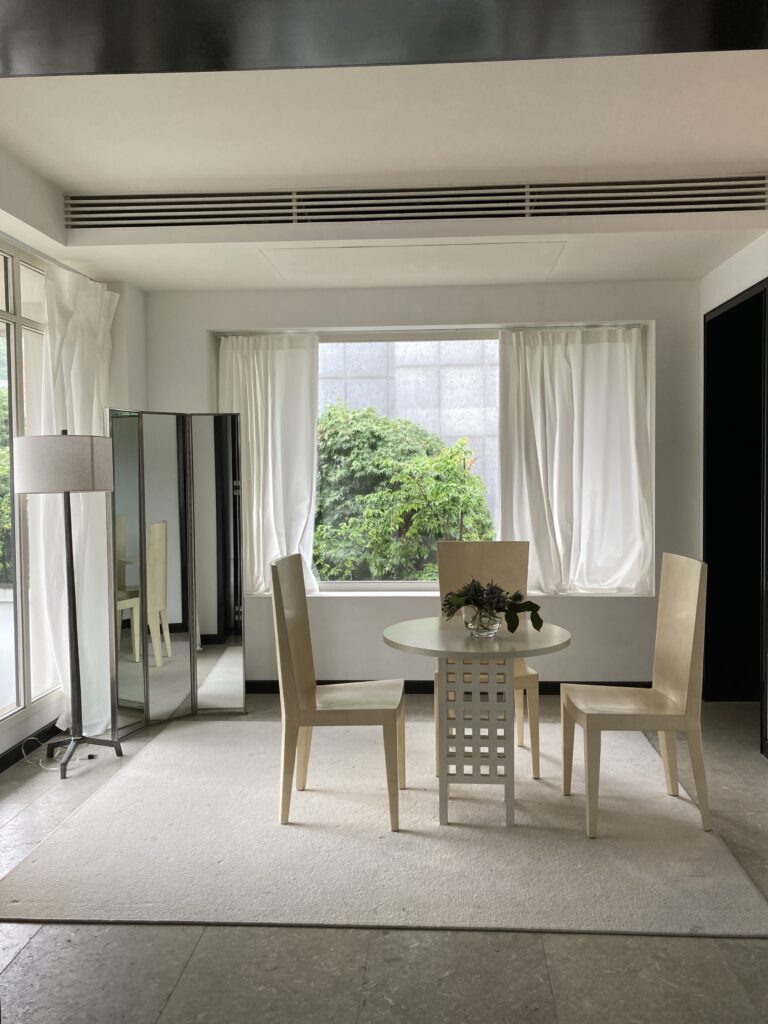
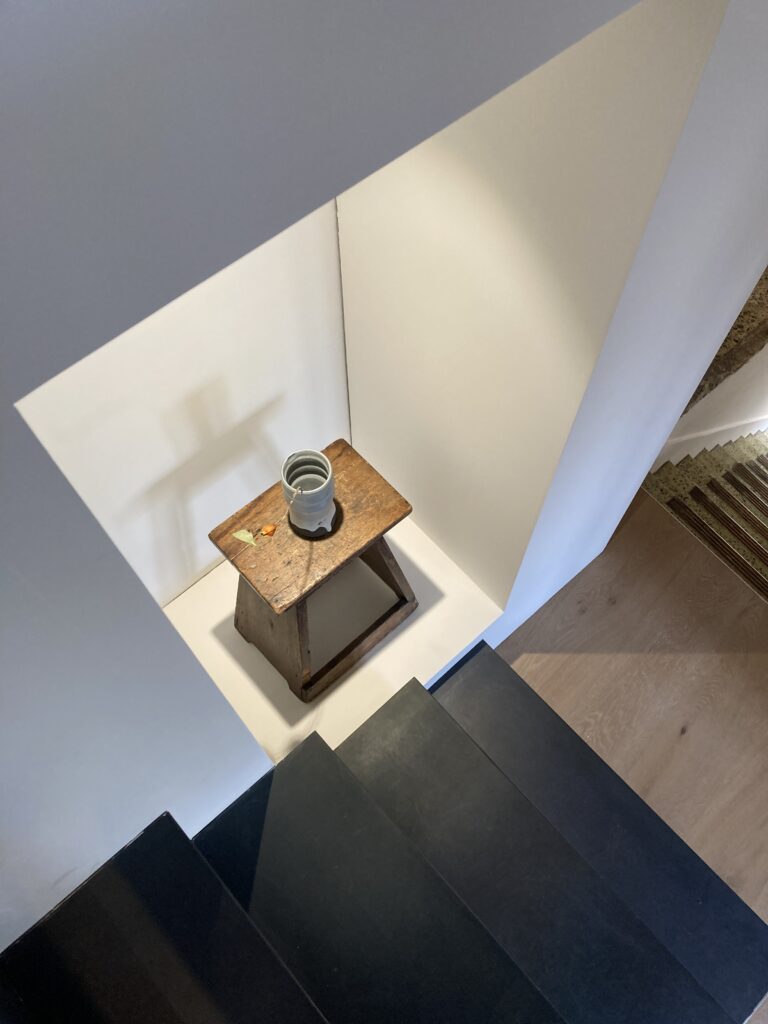
I started exploring slowly from the first floor and was able to listen to an explanation from a tour guide. The Kim Chung-up House of Architectural Culture is a space located in the Jangwi-dong area of Seongbuk-gu(성북구)—which was a wealthy neighborhood packed with luxury homes back in the 1970s. A private owner commissioned the Kim Chung-up’s Studio to remodel and reinterpret an existing house into a unique style. Recognizing its value in modern and contemporary residential culture, it was designated as a Seoul Future Heritage site in 2017.
Architect Kim Chung-up(김중업) is notably the only Korean who was a disciple of Le Corbusier. Perhaps because of this, the building allowed me to experience both Eastern and Western charms simultaneously. Western elements included the fireplaces in the first and second-floor living rooms, the chandeliers hanging from the ceilings, the stained-glass windows that gave off a cathedral-like vibe, the French-style bathroom layout and dressing room on the second floor, and the outdoor greenhouse that emphasized spatial connection. On the other hand, the traditional Korean Hanok elements brought into the design were the exposed Hanok rafter structures on the ceiling, the living room floor laid out in a traditional wooden-plank style (Umul-maru: 우물마루), and the windows covered with traditional Korean paper (Changhoji: 창호지).
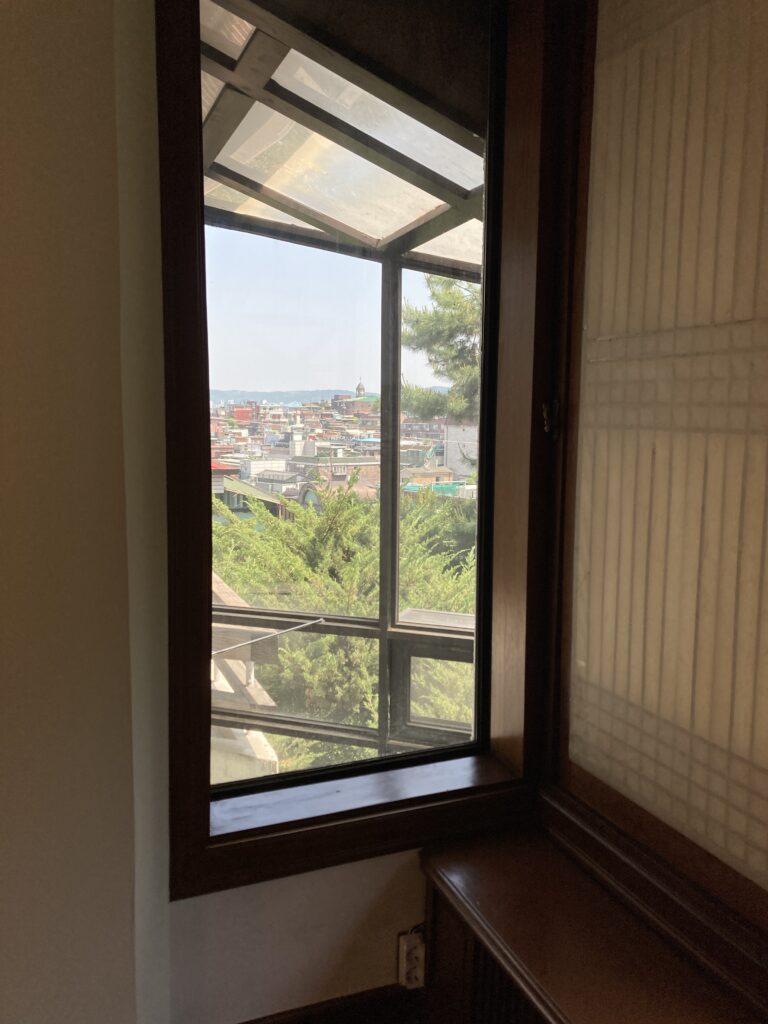
To add a few details that I learned directly from the guide, the house did not have Ondol (온돌: the traditional Korean underfloor heating system), making the fireplaces and radiators absolutely essential. (This would be another Western element, and as a Korean, the lack of Ondol felt like a major drawback that severely lessened its charm as a home.) Furthermore, because the surrounding area has been entirely developed, the views have become blocked on all four sides. There are also ongoing discussions about apartment redevelopment nearby, raising concerns that this place might eventually be completely hemmed in by even taller buildings, left standing entirely alone. It was a very “Seoul-esque” story that left me with a lot to think about.
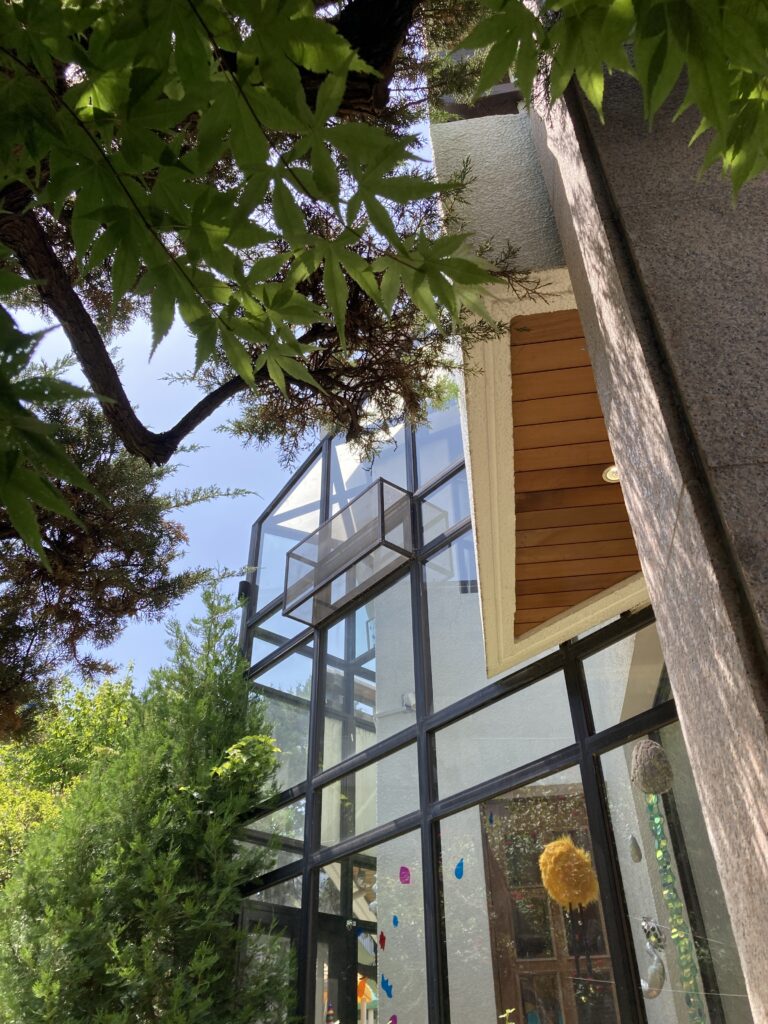
+Tip: If you are highly interested in architecture and design, tracing the footsteps of architect Kim Chung-up throughout Seoul could be a thoroughly enjoyable journey. (His notable works include the World Peace Gate at Olympic Park, the Embassy of France in Korea, the former Seo Gynecological Clinic, and the Cecil Theater.)
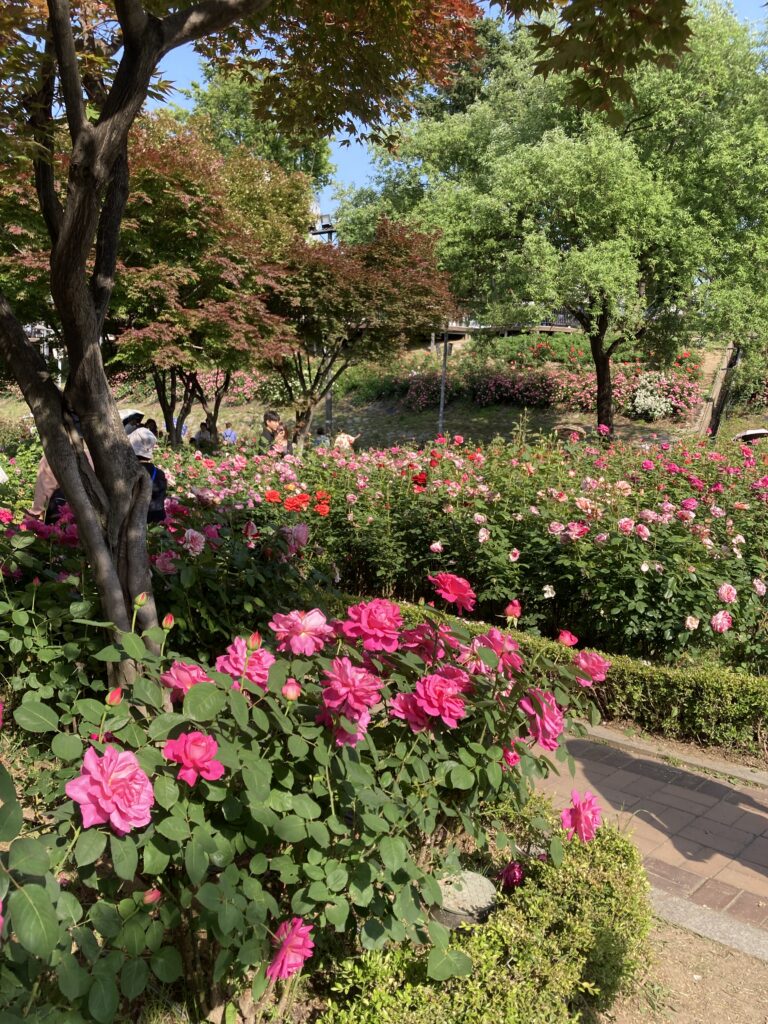
From the ‘Kim Chung-up House of Architectural Culture’, I took a bus and headed to Jungnang Rose Park to enjoy the Jungnang Rose Festival. This park, which serves as the starting point of the festival, was close to Taereung Entrance Subway Station(태릉입구역). The roses were in full bloom along a path that stretches down toward Junghwa Station(중화역) along the Jungnangcheon Stream(중랑천).
Jungnang Rose Park / Jungnang Rose Festival
- Address: 375 Muk-dong, Jungnang-gu, Seoul
- Map: Google Maps | Naver Map (Recommended for navigation in Korea)
Fortunately, I happened to visit on the exact weekend the festival kicked off, so the roses were beautifully at their peak. They were larger in size than the roses I usually see, and the sheer variety of types was fascinating to look at as I walked. It actually reminded me of the International Rose Test Garden I had visited in Portland, USA.
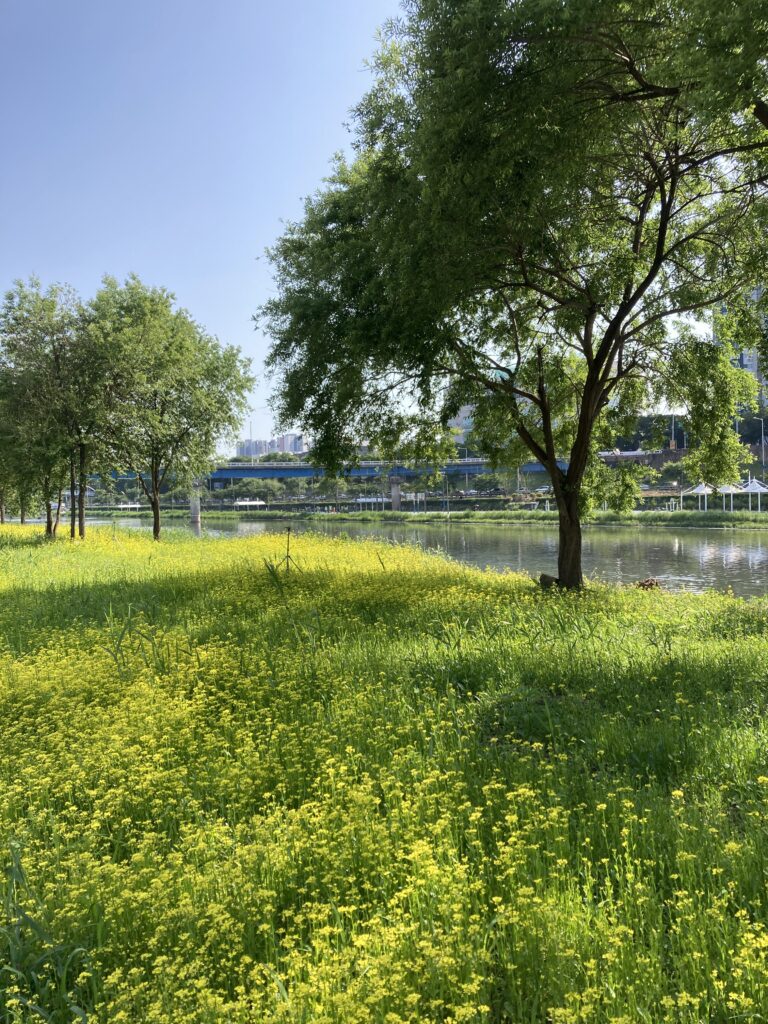
As I walked along the Jungnangcheon Stream admiring the roses, I came across a section where canola flowers were blooming in abundance. The combination of the lush green trees and the bright yellow canola flowers was so stunning—and reminded me so much of Jeju Island(제주도)—that it made me feel even happier. Little did I know at the time that I would be seeing canola flowers even more vividly later on(More on that in my next post!). Yet, the scenery of the canola flowers and the Jungnangcheon Stream juxtaposed against the high-rise apartments in the background felt a bit unnatural, though I caught myself thinking, “Well, this is exactly what Seoul looks like.”
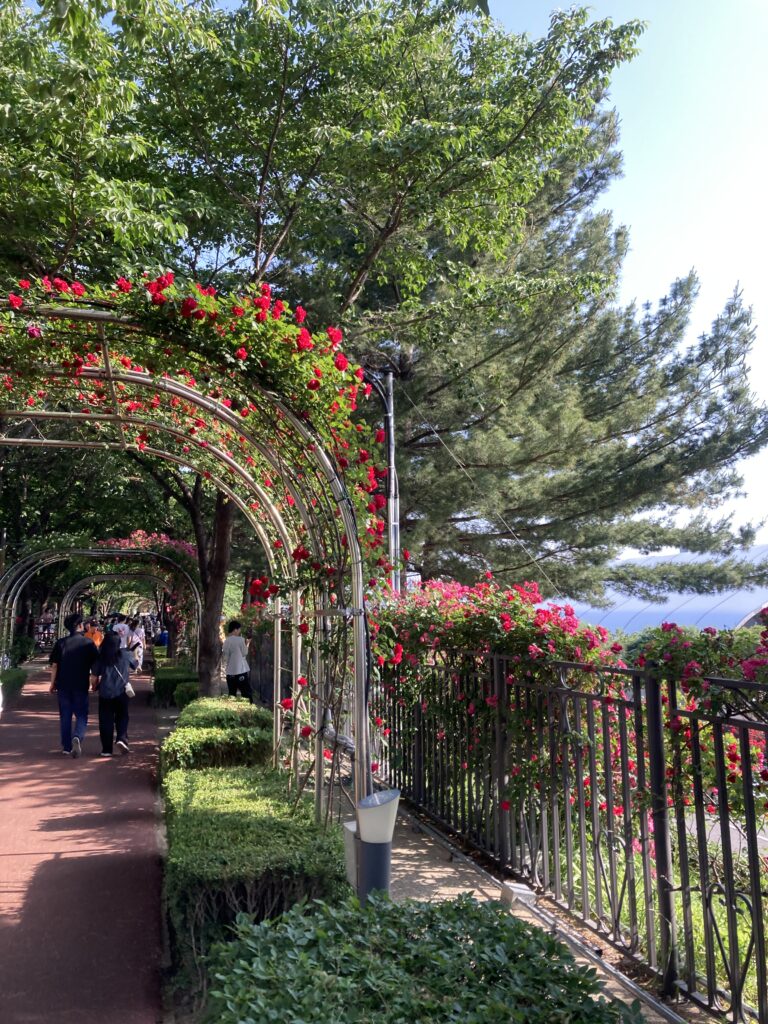
Because the sunlight was intense and the temperature was quite high that day, I had worried whether I would be able to walk the distance of about two subway stations. However, as I walked along taking in the views of the roses and canola flowers, I actually found myself feeling a bit sad by the time I passed through the final rose tunnel. Although the Seoul Rose Festival in Jungnang lasts for a short period of less than ten days in May, you can encounter roses and various other flowers in Seoul’s large parks (such as Olympic Park and Seoul Forest) as well as tucked away in alleyways along the streets. Therefore, letting this be a part of your experience to enjoy Seoul between spring and early summer would be an excellent choice.
Safe travels, Soy Kim
You might also like:
Nam-seoul Museum of Art: A Hidden Boutique Gallery in Sadang, Seoul
One Comment